
01
Spot discharge risk before it cascades
Readiness, post-acute placement friction, and authorization drag appear in one sequence before they become a bed crisis.
Fusia
Fusia gives health systems a shared operating layer for capacity, discharge readiness, and escalation so teams can recover beds with less friction and more confidence.
Focus
Discharge readiness, placement bottlenecks, and throughput escalation.
Audience
COOs, CMOs, nursing leaders, and teams carrying daily capacity pressure.
Promise
Less operational fog. Faster action. More beds back in play.
Health systems do not need another fragmented queue. They need one operational story that shows where momentum is stalling and where intervention will matter next.
Fusia is designed to become that story: a shared command layer that turns hidden discharge friction into visible, coordinated movement.
Signal
Designed around inpatient flow, discharge management, and the constraints hospital teams already work inside.
Signal
Every screen is aimed at reducing ambiguity so teams can act faster without creating new handoff risk.
Signal
Fusia helps surface who is waiting, what is blocked, and where action will free the most capacity next.
This is where the page blooms. Leadership can read bed pressure, discharge barriers, and active movement in seconds, then move directly into the highest-value interventions.
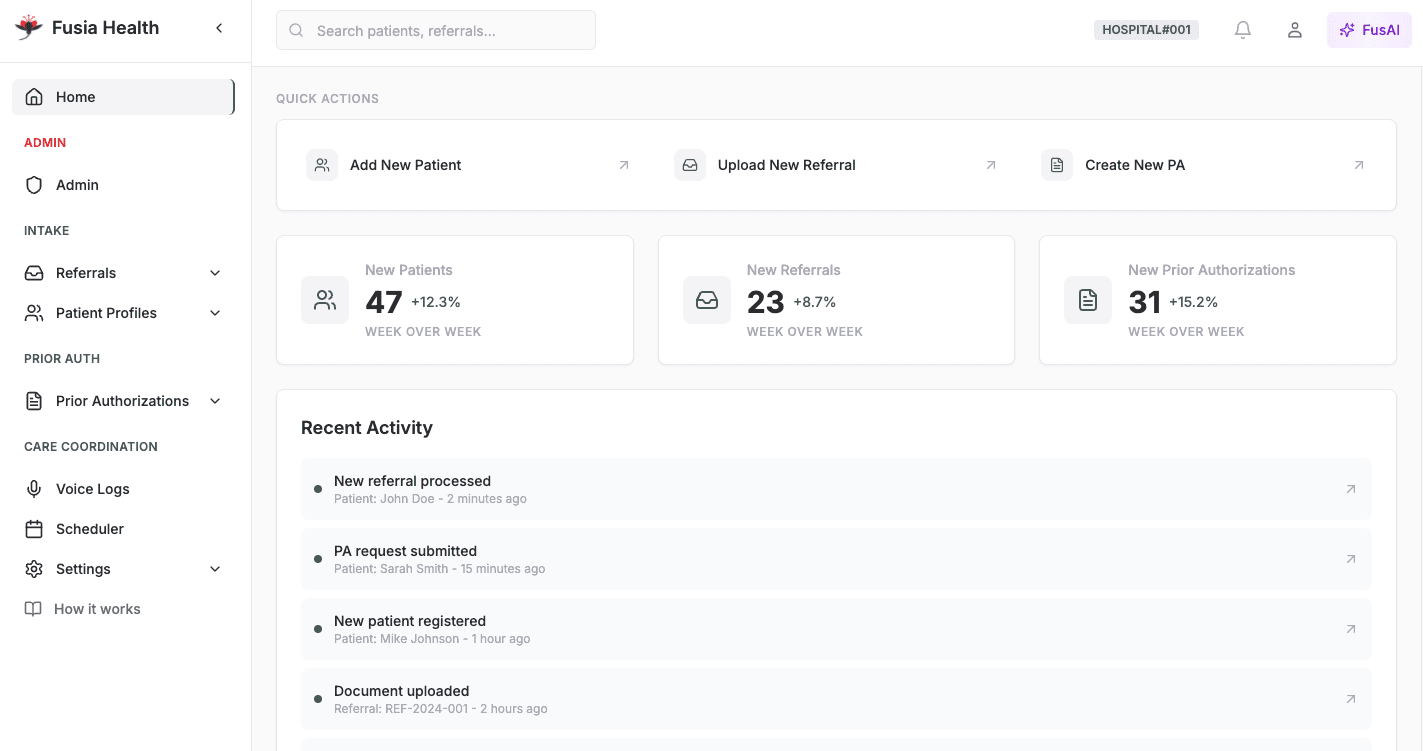
Throughput lens
Instead of asking teams to hunt for blockers, Fusia stages the next move in one shared sequence.
Readiness, post-acute placement friction, and authorization drag appear in one sequence before they become a bed crisis.
Case management, UR, nursing leadership, and external partners work from the same live priority set instead of separate status lists.
Leadership sees what is blocked, who owns the next action, and where intervention will free the most capacity next.
Fusia is for hospital leaders who want capacity recovery to feel controlled, legible, and operationally credible from the first demo.
What leaders get
A cleaner operational story for throughput, discharge planning, and bed capacity management.
What teams feel
Less rework, fewer blind handoffs, and a clearer understanding of where to act next.